
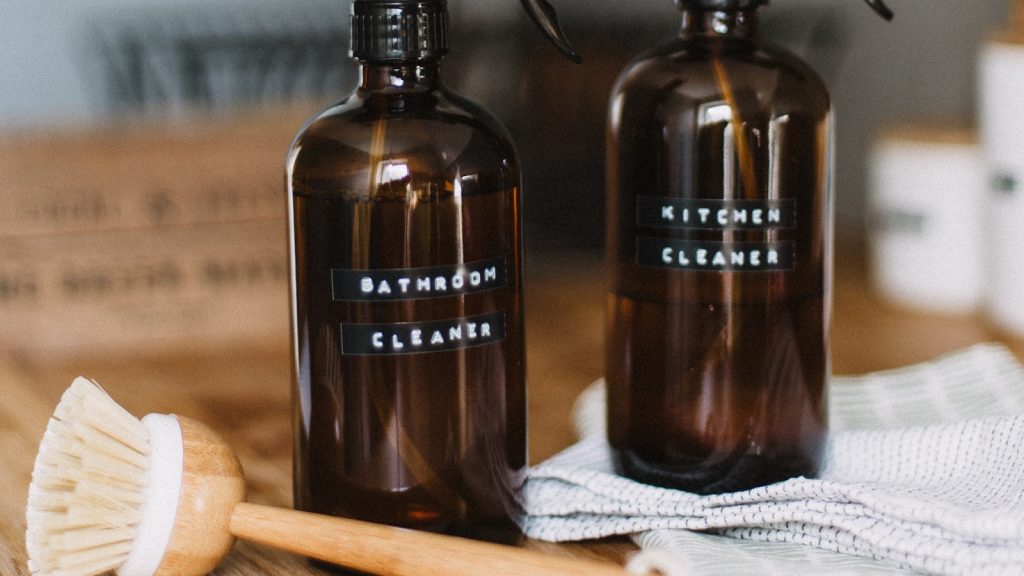
Short answer: eco-friendly cleaning means using the least aggressive product that will actually do the job, removing the source of a smell rather than masking it, and avoiding the products that damage septic systems. It does not mean vinegar solves everything, and honest green cleaning admits where it falls short.
Out here it is more than a preference. A large share of properties in Joshua Tree, Yucca Valley and Twentynine Palms run on septic rather than town sewer, and many rural parcels are on private wells with limited storage. What goes down your drain matters more than it does in a city.
Why we treat this as a health question first
Aggressive cleaning products leave residue on the surfaces people touch and eat from, and release volatile organic compounds into air that stays in the house for hours afterwards. In a home with a toddler on the floor, a dog licking the tile, or anyone with asthma, that is a meaningful exposure rather than an abstract concern.
Tamara built this business in 2022 after years around her husband’s work as a first responder, which shaped a fairly specific view: the condition of a home is a health issue before it is a cosmetic one. That is why non-toxic products are our default rather than a premium tier we charge extra for.
The septic problem nobody warns you about
A septic system works because of bacteria. Solids break down in the tank through bacterial digestion, and the system only functions while that colony is healthy.
Caustic drain openers and large volumes of chlorine bleach are antibacterial by design. Poured down a drain repeatedly they kill the bacteria the tank depends on, solids stop breaking down, and the result is a backed-up system and a bill that runs into the thousands.
Practical rules for a septic property:
- Never use caustic drain openers. A genuinely blocked drain is a plumber’s job, not a chemical one.
- Keep bleach to small, occasional amounts rather than routine heavy use.
- Avoid antibacterial products as an everyday default.
- Nothing but human waste and toilet paper goes down the toilet. Wipes labelled flushable are not.
- Spread laundry through the week rather than running several loads in one day, which floods the tank.
What works, and what is wishful thinking
Where simple products genuinely perform
- White vinegar on light mineral deposits, kettles and shower heads, given enough contact time.
- Bicarbonate of soda as a gentle abrasive for sinks and cooktops, and as a genuine odour absorber in fridges.
- Castile or plant-based soap for general surface cleaning, floors and dishes.
- Microfibre and water for most dusting and glass. On glass, a good microfibre cloth outperforms most sprays.
- Enzyme cleaners for organic messes, pet accidents and drains. Enzymes digest the material causing the smell rather than covering it.
Where they do not, and pretending otherwise wastes your time
- Heavy limescale. Years of mineral buildup on shower glass needs a proper acidic descaler with dwell time. Vinegar will not get there.
- Baked-on oven grease. Bicarbonate paste helps at the margins. Carbonised residue needs a real degreaser.
- Mould beyond surface level. Surface mould wipes off. Anything into grout or drywall needs fungicidal treatment, and extensive growth needs a remediation specialist.
- Disinfection when it genuinely matters. After illness or a biohazard event, you need a registered disinfectant used correctly.
The honest position is this: use the least aggressive product that will actually work. Sometimes that is vinegar. Sometimes it is not, and insisting otherwise just means the job does not get done.
Stop masking odours
Air freshener does not remove anything. It adds fragrance compounds to air that still contains whatever was causing the smell, and it is a common asthma and migraine trigger.
Household smells almost always have a findable source. The usual suspects: a dry P-trap in a rarely used bathroom letting sewer gas up, the dishwasher filter, the washing machine door seal, the bin itself rather than its contents, pet bedding, and a fridge drip tray. Find it, deal with it, and the smell goes permanently.
A genuinely clean house smells of nothing at all. If you associate a scent with cleanliness, that association came from advertising.
A realistic starter kit
You do not need a cupboard of specialised products. Most homes are covered by:
- A plant-based all-purpose concentrate
- White vinegar
- Bicarbonate of soda
- An enzyme cleaner for organic messes
- A proper descaler, kept for hard water jobs only
- A stack of good microfibre cloths, colour-coded by area
- A vacuum with sealed HEPA filtration
That last one matters more here than most places. Desert dust is fine mineral sand, and a vacuum with poor filtration takes it in and blows it straight back out into the room.
One warning on natural stone
Marble, travertine and limestone are calcium-based, which means acid dissolves them. Vinegar, citric acid and any descaler will etch the stone itself, leaving dull patches worse than the original mark. If you have stone surfaces, use a pH-neutral stone-safe product and nothing else. If you are not sure what a surface is, treat it as stone until you know.
Every service we run uses non-toxic products as standard at no premium. See eco-friendly house cleaning for what that means in practice, or our guide to hard water for the one job where a gentler product genuinely will not do.
Frequently asked questions
Do eco-friendly cleaning products actually work as well?
For the large majority of household cleaning, yes, and the difference in result is negligible. Where they genuinely fall short is heavy mineral scale, baked-on grease and mould beyond surface level. The sensible position is to use the least aggressive product that will actually do the job rather than committing to a label in either direction.
What cleaning products damage a septic system?
Caustic drain openers are the worst offenders, followed by routine heavy use of chlorine bleach and everyday antibacterial products. A septic tank breaks down solids through bacterial action, and these products kill the bacteria doing that work. Flushable wipes are a separate but equally serious problem because they do not break down.
Is vinegar safe on all surfaces?
No. Vinegar is an acid, and it will etch natural stone such as marble, travertine and limestone, which are calcium-based. It can also damage some sealed hardwood finishes and rubber seals with repeated use. It is excellent on glass, chrome, kettles and light mineral deposits, but check the surface first.
How do I get rid of pet smell without air freshener?
Find and treat the source rather than covering it. Wash pet bedding, use an enzyme cleaner on any accident sites including the padding underneath carpet, vacuum thoroughly with sealed HEPA filtration, and check for a dry P-trap or a dirty washing machine seal. Enzymes digest the organic material that causes the odour, which is why they work permanently where fragrance does not.
Are green products safe around babies and pets?
That is the main reason to use them. The concern with conventional products is residue left on surfaces a child crawls on or a dog licks, and volatile compounds in the air afterwards. Non-toxic, low-fragrance products mean nobody has to leave the house while you clean or air it out afterwards.